The Amazon Expedition
A remote mountain bike expedition built around humanitarian action, first-hand experience, and global awareness of what is happening in the Amazon today.
$2,600 USD
5-Day Expedition / Per Person
$3,250 USD
9-Day Expedition / Per Person
Transport Included
From Bogotá into the expedition region
Basic Off-Road
Riding Skill Required
Max 8 Riders
Per Expedition
Discovery Call
20-minute call · Required
Book a Discovery Call
The Amazon Expedition begins with a Discovery Call — not instant booking. Book a short call to confirm fit, questions, and dates.
Book a Discovery CallThis is not a canned tour. It is not a staged cultural experience. It is not a predictable vacation.
It is an expedition into one of the most complex, intact, and demanding ecosystems on the planet — guided by years of field relationships, mission work, and a commitment to entering the Amazon without turning it into a product.
Mountain Bike Colombia does not run this journey to make the Amazon easier to consume. We run it to help the right riders enter a living territory with preparation, humility, purpose, and respect.
Through years of shared work with Dulce Amazónica, Amazon ambassadors, local guides, and Indigenous community partners, we have built the relationships that make this expedition possible. Those relationships open the door, but the Amazon determines the path. Rivers rise, trails change, weather moves in, and mission priorities may shift. Riders must be ready to adapt with patience, humility, and trust in the team.
Our relationships open the door, but the Amazon determines the path.
You may ride jungle trails, travel by river, hear the forest at night, encounter extraordinary wildlife, move near ancestral landscapes, and experience a world most riders will never truly understand from the outside.
But nothing here is staged. Nothing is guaranteed. Nothing is performed for you.
You should apply only if you are ready for discomfort, uncertainty, humility, responsibility, and the possibility of being changed by what the Amazon asks of you.
What the Video Shows
Most People Enter the Amazon.
Few Ever See It.
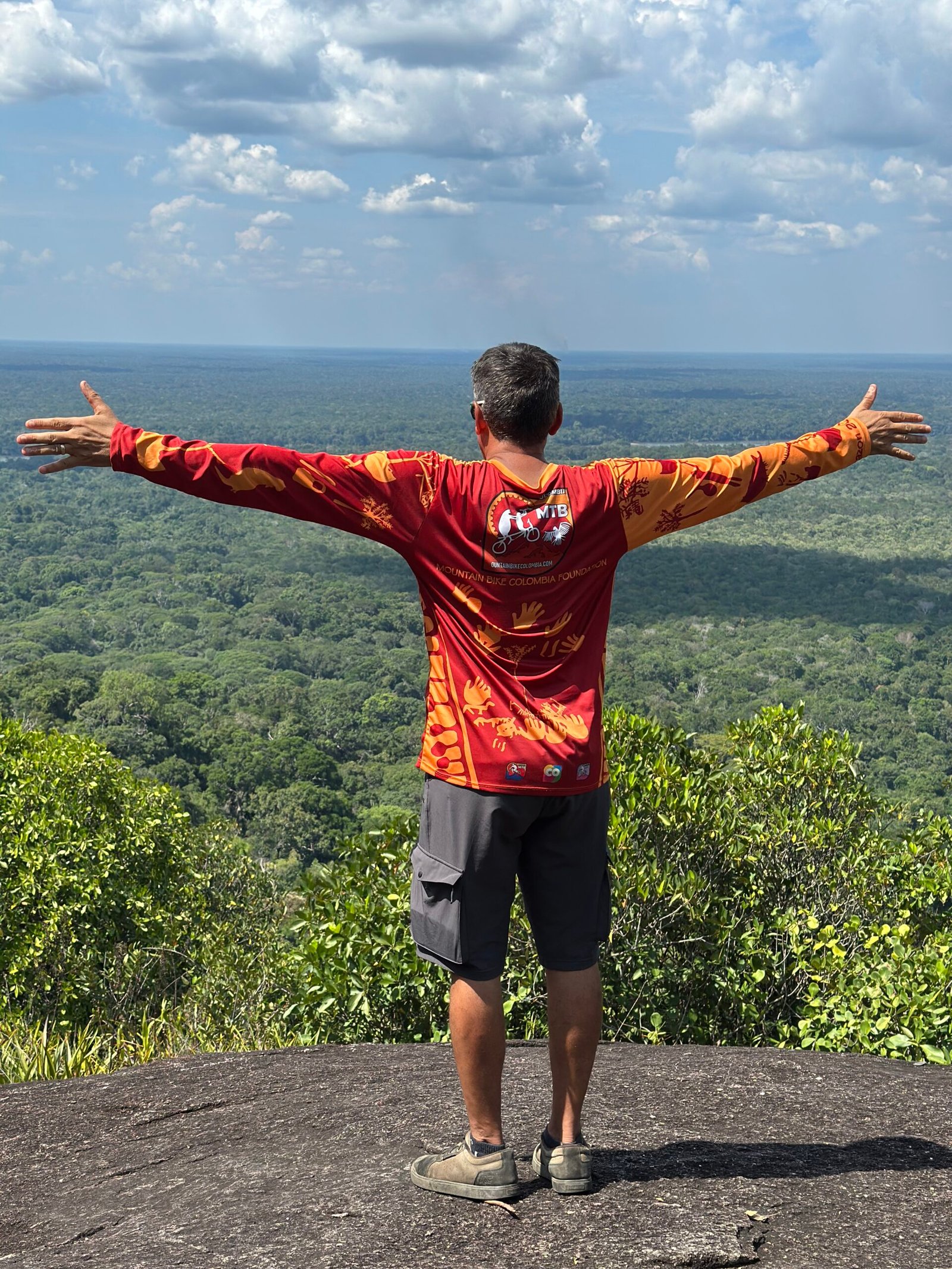
At river level, on boats, lodge decks, and forest trails, the Amazon surrounds you so completely that its scale stays hidden. The canopy rises overhead, the humidity closes in, the vegetation crowds every direction. You are inside the Amazon, but the Amazon as a whole living world remains invisible to you.
To understand what you are inside, you need elevation. A tepui, a cerro, a high Amazon viewpoint where the canopy opens below you in every direction and the rainforest stretches beyond the horizon as far as the eye can reach.
From above, you stop perceiving the Amazon as a backdrop. You begin to understand its magnitude: the canopy stretching to the edge of sight, the river systems threading through it, the isolation, the fragility, and the power of the place. This is where the Amazon stops being an idea and becomes a living world you can finally comprehend.
From the forest floor, the Amazon surrounds you.
From a cerro or tepui, the Amazon reveals itself.
This expedition is designed to create both experiences.
The Expedition Philosophy
The Amazon Does Not Adapt to Us
A normal tour tries to control the experience.
It creates comfort. It fixes the schedule. It removes uncertainty. It builds a version of place that can be consumed easily by visitors.
That is not what this expedition is.
The Amazon does not adapt to us.
We adapt to the Amazon.
When the river rises, we adjust.
When rain changes the trail, we adjust.
When heat slows the group, we adjust.
When safety requires a different route, we adjust.
When local conditions change, we adjust.
When the mission requires patience, we adjust.
This is not inconvenience.
This is the lesson.
The Amazon teaches through discomfort, scale, silence, heat, mud, beauty, danger, generosity, and unpredictability.
For the right person, that is not something to avoid.
It is the reason to come.
Read This Before You Apply
This Expedition May Be Right for You If
- You can ride through heat, mud, humidity, rain, and changing terrain over several consecutive days — and treat discomfort as part of the work, not a problem to be solved.
- You can accept route changes without needing them explained or justified.
- You understand that community contact happens through trust and conditions, not through a schedule.
- You are comfortable with basic sleeping conditions, river transport, limited electricity, and long periods without normal infrastructure.
- You understand that your payment supports a larger mission, and that communities are not props, beneficiaries, or attractions.
- You follow photography, conduct, and consent protocols without negotiation.
- You are useful, patient, and humble when plans change.
- You can hold yourself together in a small team where one person’s mood affects everyone.
You May Be Better Served by a Different Amazon Experience If
- You need fixed lodging, fixed routes, air conditioning, predictable meals, or guaranteed daily outcomes.
- You expect wildlife sightings, community visits, cultural performances, or access to specific sites on a schedule.
- You want a cheap Amazon adventure.
- You become frustrated when weather, river levels, safety, or guide judgment change the plan.
- You measure the value of an experience only by what you personally receive.
- You want to photograph or consume Indigenous culture as part of a travel checklist.
There is nothing wrong with wanting comfort or predictability. But this expedition is not designed around those values.
Before You Commit
What You Are Actually Applying For
This is a mountain bike expedition, but the bike is only one part of it.
Depending on where the team is operating, what the mission requires, which routes are open, and what conditions allow, an expedition may include some or all of the following:
- Riding on jungle singletrack, forest roads, and remote terrain
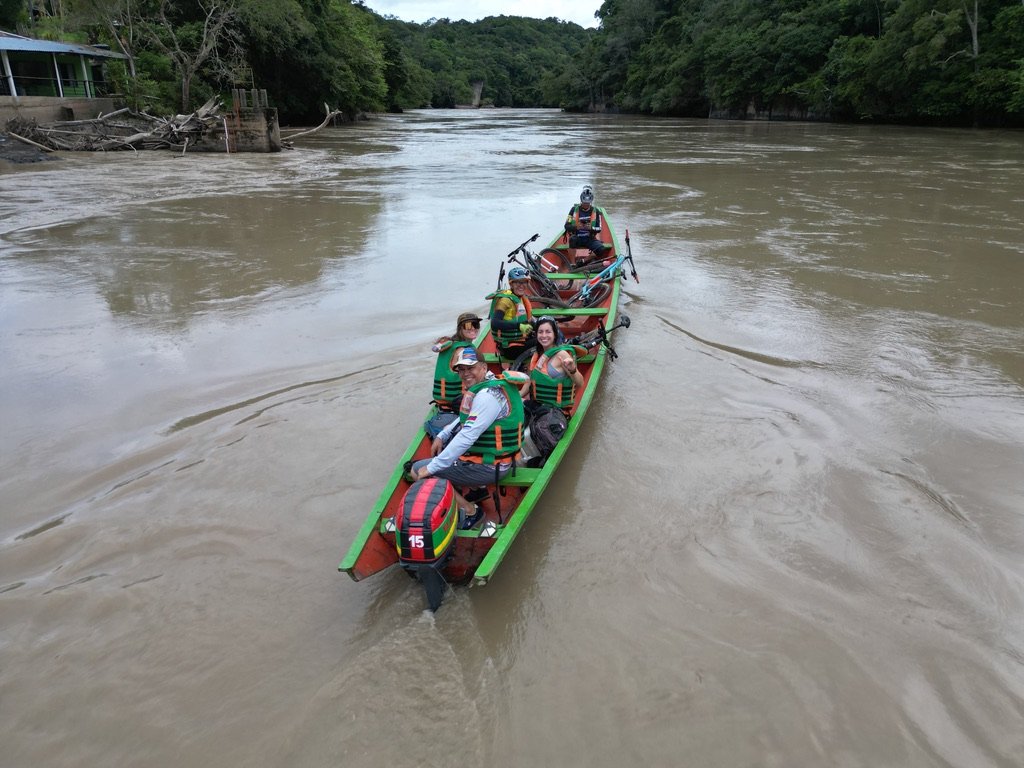
- River transport by motorboat or canoe, sometimes with bikes on board
- Connecting sections by boat and flight where terrain, timing, or river conditions require it
- Riding distances that vary by day, route, conditions, and mission objectives — not by a fixed schedule
- Heat, mud, rain, humidity, insects, and trail conditions that change without notice
- Hammocks, community guesthouses, or basic camping depending on where the route leads
- Food prepared through local relationships: river fish, yuca, jungle fruit, community meals
- Limited electricity and no normal tourism infrastructure
- A small team where one person’s attitude affects everyone
No two expeditions follow the same path. The route, the distances, and the transport are shaped by what the Amazon allows and what the mission requires — not by what was planned months in advance.
The Role of the Bicycle
The Bike Is the Method, Not the Purpose
This is a mountain biking expedition, but the bike is not the highest priority. The bike is our method of movement — quiet, human-powered, low-impact transportation that lets us travel through remote terrain with less noise, less infrastructure, and more humility than motorized tourism.
We are not here to conquer distance, chase speed, or turn the Amazon into a sporting achievement. We use mountain bikes to move carefully through a living territory, support the mission, and remain close enough to the land to understand why it matters.
The bike gives us access, but it does not give us permission. Permission comes through relationships, respect, local guidance, safety, and the conditions the Amazon allows.
Why mountain bikes work for this expedition:
Quiet travel through a living, inhabited territory · Human-powered where possible · Low-impact movement through sensitive ecosystems · Slower pace that forces direct understanding of distance, heat, mud, terrain, and place · Greater attention and presence than motorized transport · Closer contact with the land · The terrain decides what is possible, not the vehicle.
Mountain bikers are well-suited for this kind of journey because they understand terrain, distance, endurance, self-reliance, and the humility that comes from moving through wild places under their own power. On this expedition, those qualities are redirected toward something larger than sport.
The sport of mountain biking serves the expedition.
The expedition does not serve the sport.
The Rider as Witness
For the right rider, this expedition is an opportunity to use mountain biking for something larger than personal adventure. It is a chance to become a witness, carry the story responsibly, and help raise awareness about the challenges facing the Amazon and the communities who protect it.
By entering carefully, listening, learning, and sharing responsibly, riders can help bring attention to threatened ecosystems, food security, cultural survival, and the need for fair-trade relationships that respect Indigenous sovereignty and ancestral knowledge.
The rider is not just there to complete a route. The rider becomes a witness.
Two Different Amazons
Two Very Different Ways to Enter the Amazon
The tourism industry has built an accessible version of the Amazon. Staged cultural performances. Scheduled boat tours. Hotels with river views. Controlled community visits arranged in advance. Experiences designed to fit a tourist calendar without asking too much of the visitor.
For many people, that is the right way to go. It is a legitimate choice.
This expedition is not that Amazon.
We do not arrange performances. We do not schedule community visits. We do not package the forest into a predictable experience. We move through the Amazon on its terms — with relationships built over years, routes shaped by conditions, and a mission that comes before any itinerary.
The two photos below show the difference. One is what Leticia offers visitors. The other is what happens when access comes through trust, not tourism.
One is a performance. The other is a relationship.
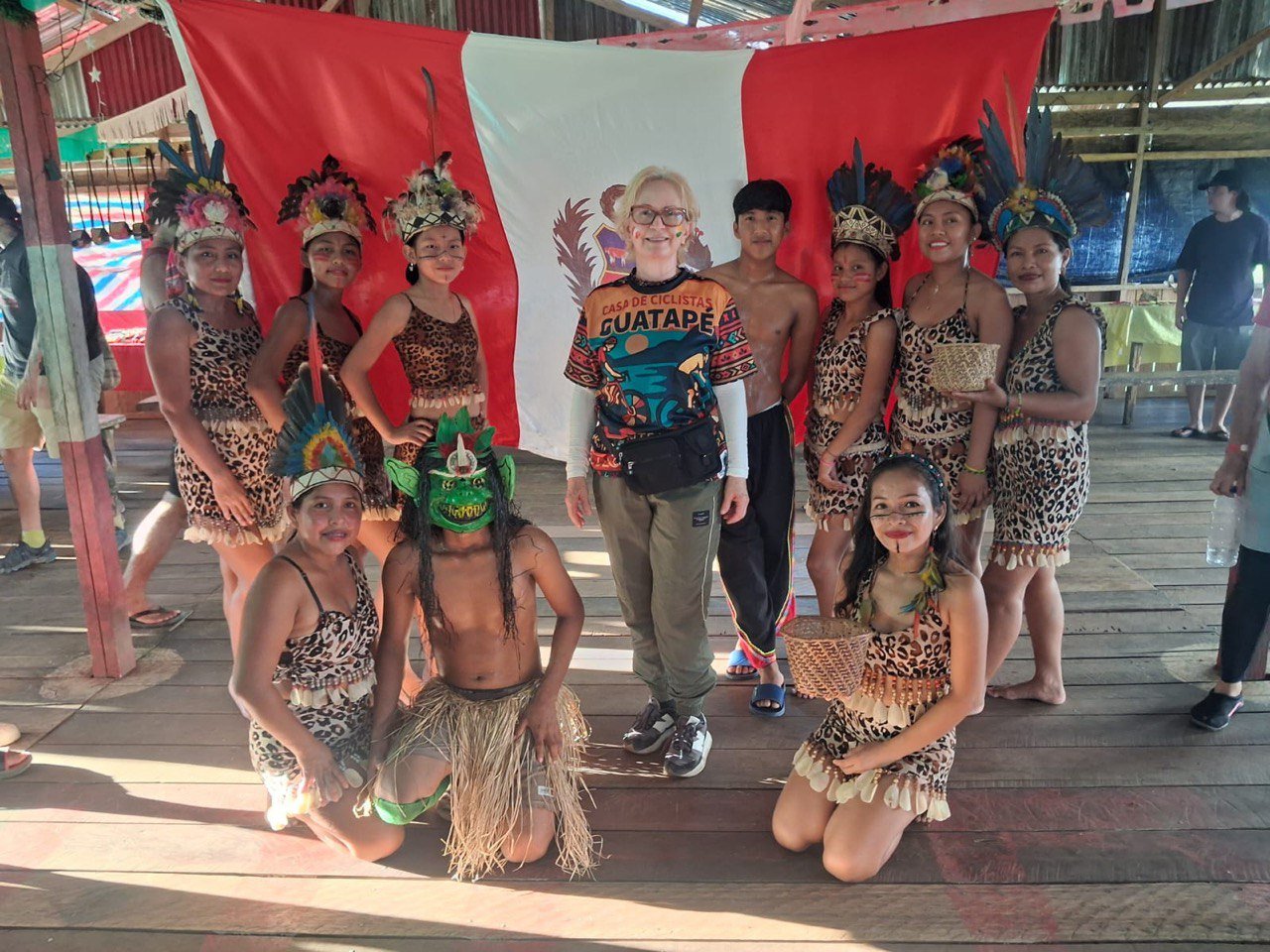
Leticia: staged cultural performance arranged for visitors
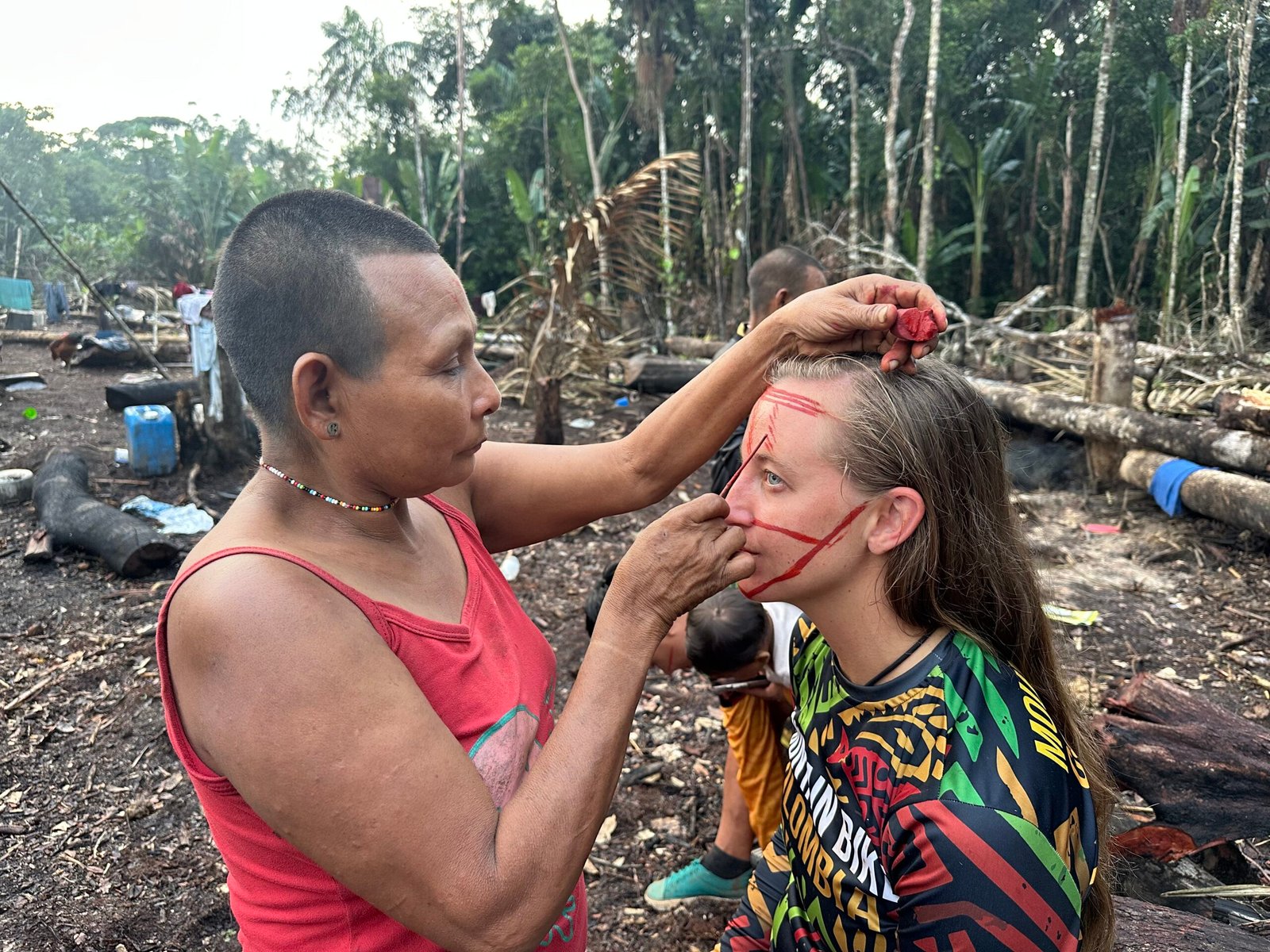
Nukak Territory: a community member paints a rider’s face — not a performance, not a paid activity. An act of gratitude after our team delivered needed clothing and hundreds of baby chicks to the community.
The Territory
What You Will Move Through
The Colombian Amazon is not a destination. It is a living system of rivers, forests, communities, and ancestral relationships that have existed far longer than any road or tourist map.
When conditions allow, the expedition moves through:
- Dense jungle singletrack that requires attention, not speed
- River corridors connecting territory that does not appear on any tourist route
- Forest ecosystems with extraordinary biodiversity at densities most riders will never encounter again
- Indigenous territory accessed through years of relationship, not through tourism arrangements
- Local food sourced through field relationships: river fish, yuca, jungle fruit, community meals
- Ancestral knowledge shared in conversation, not in staged presentations
The Amazon may reveal macaws, toucans, monkeys, river dolphins, caimans, frogs, insects, medicinal plants, tracks in the mud, night sounds, or movements in the canopy that you never fully identify.
It may also bring you near ancient formations, ancestral paths, rock art areas, or culturally significant places — but only when local guidance, safety, respect, and conditions make that appropriate.
These moments are not scheduled attractions. They are encounters that happen, or do not happen, on the Amazon’s terms.
The Amazon does not follow an itinerary. Learning to move with its conditions is part of the expedition.
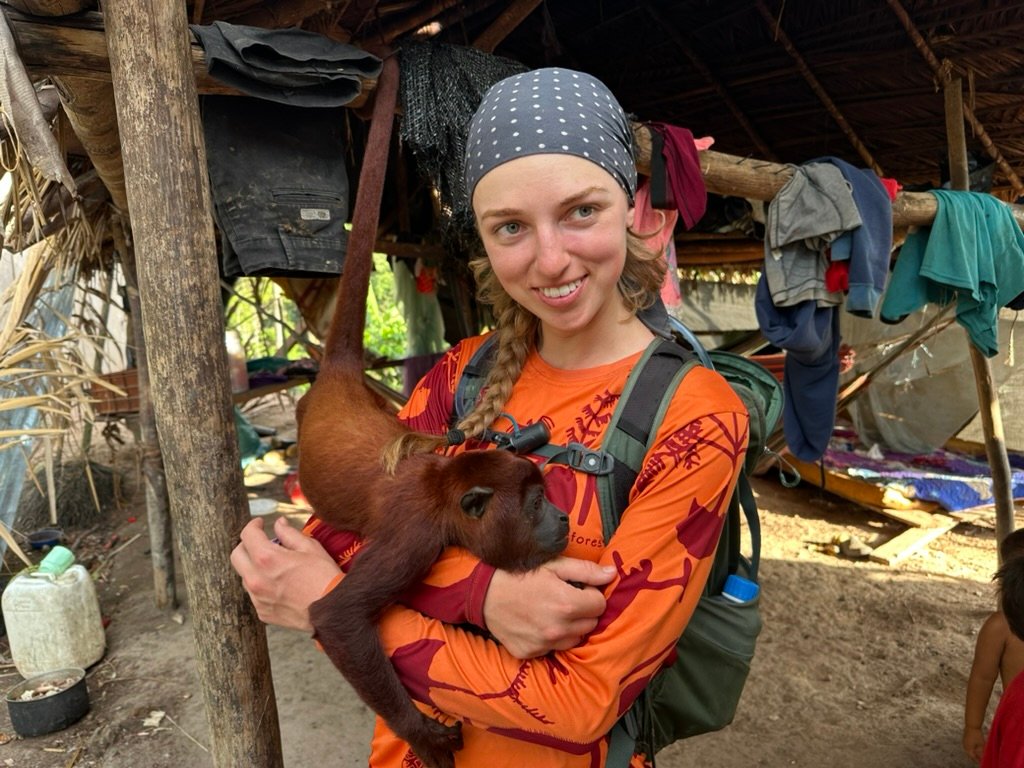
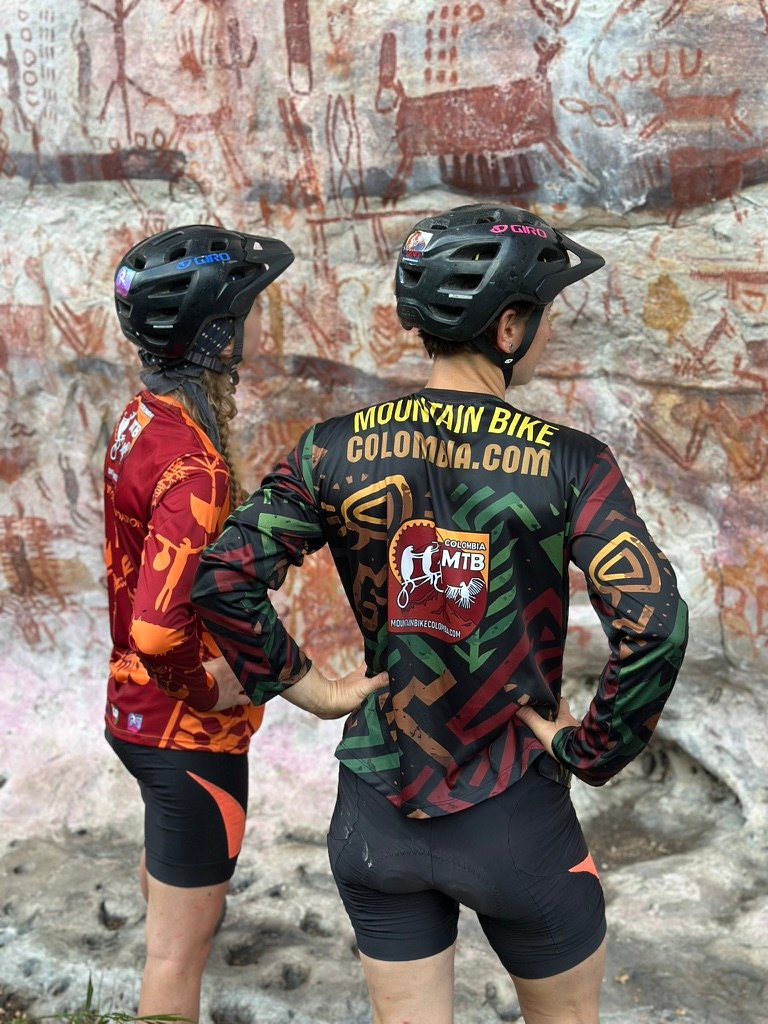
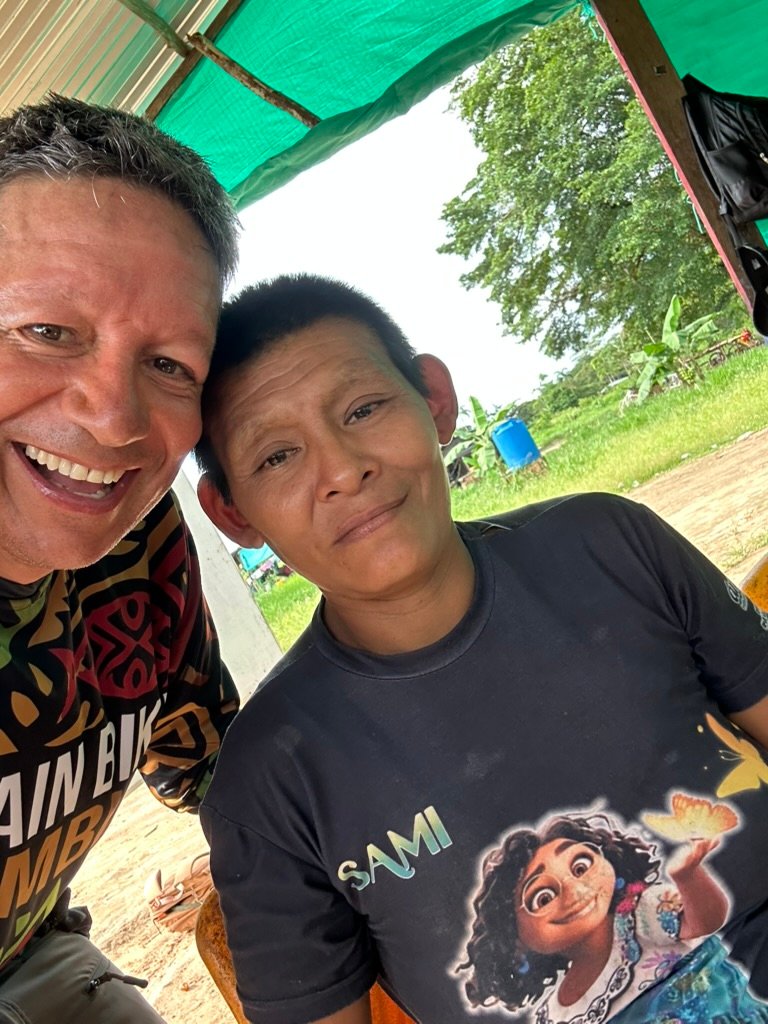
The Relationships That Make This Possible
How Community Relationships Work
Through years of shared work, trust, fair-trade exchange, and practical support, Mountain Bike Colombia and Dulce Amazónica have developed real relationships with Indigenous community partners across parts of the Colombian Amazon.
These relationships are not tourism contracts. They are not staged visits arranged to satisfy an itinerary. They are long-term partnerships built through respect, compensation, fieldwork, logistics, and shared responsibility.
Because of those relationships, our team may be welcomed into partner communities when the route, season, river levels, weather, safety, security, health, transport, and local conditions make it appropriate.
But the Amazon is not a controlled environment. Heavy rain, flooded rivers, low water, washed-out trails, extreme heat, illness, security concerns, transport delays, or guide judgment can change the plan at any time.
The relationships are real. The welcome is real. What cannot be guaranteed is the path the Amazon allows us to take.
Community contact is possible through trust, not tourism. It is never guaranteed, never forced, and never treated as an attraction.
Our relationships open the door, but the Amazon determines the path.
What This Expedition Asks
The Difficulty Is Part of the Journey
This expedition can be uncomfortable.
You may be hot.
You may be wet.
You may be covered in mud.
You may wait for a boat.
You may sleep in a hammock.
You may ride less distance than expected because the trail changed.
You may ride more than expected because the route requires it.
You may be surrounded by insects, rain, river noise, and forest sounds you do not recognize.
You may have to let go of the plan you thought you were buying.
That is not the expedition failing.
That is the Amazon refusing to become a product.
The heat teaches patience.
The mud teaches humility.
The river teaches surrender.
The forest teaches attention.
The mission teaches responsibility.
The communities teach perspective.
A comfortable tourist experience can leave you entertained.
A difficult expedition can leave you changed.
This is for people who understand the difference.
The Mission Behind the Expedition
What Your Expedition Supports
This is not charity tourism. Communities are not visited as beneficiaries, props, or emotional content.
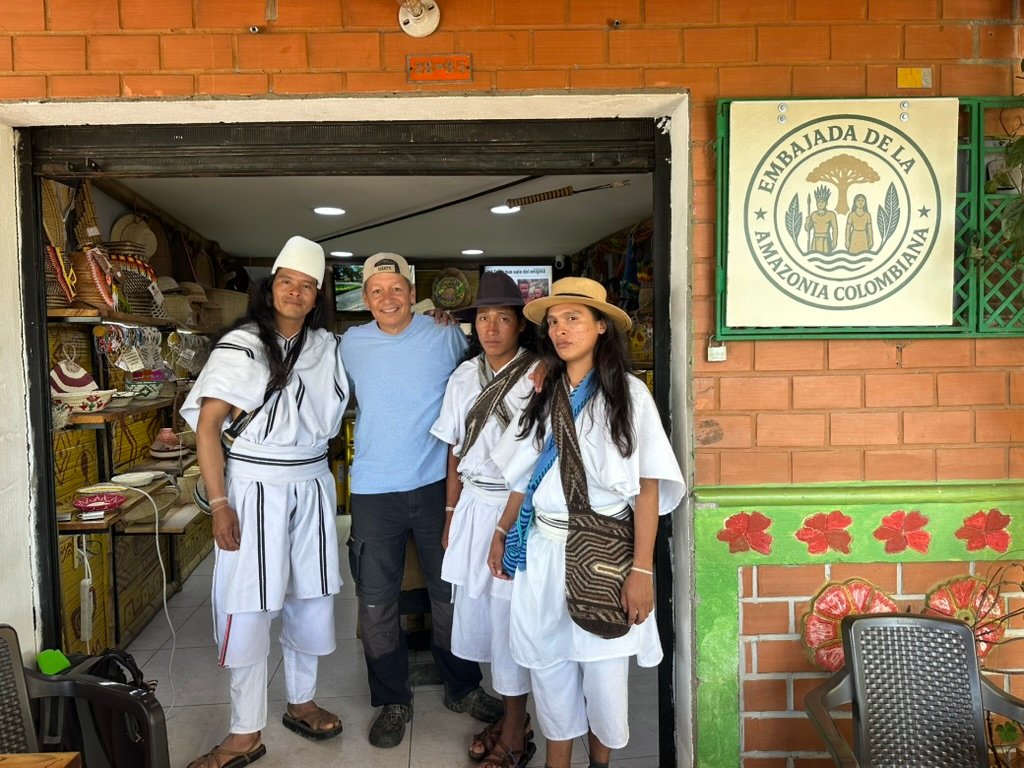
The proceeds Mountain Bike Colombia earns from this expedition are reinvested into Dulce Amazónica, the Amazon Cultural Embassy, and the field systems that support fair-trade relationships with Indigenous Colombian Amazon communities.
That support helps sustain field logistics, food-security projects, clean-water initiatives, ambassador work, community compensation, cultural exchange, responsible expedition access, and the long-term relationships that make this expedition possible. It also supports our broader global mission to raise awareness about what is happening in the Amazon and why these communities, ecosystems, and ancestral knowledge systems must be protected.
Riders pay for an expedition. Communities are compensated for their time, knowledge, hospitality, food, guidance, and participation. That distinction matters.
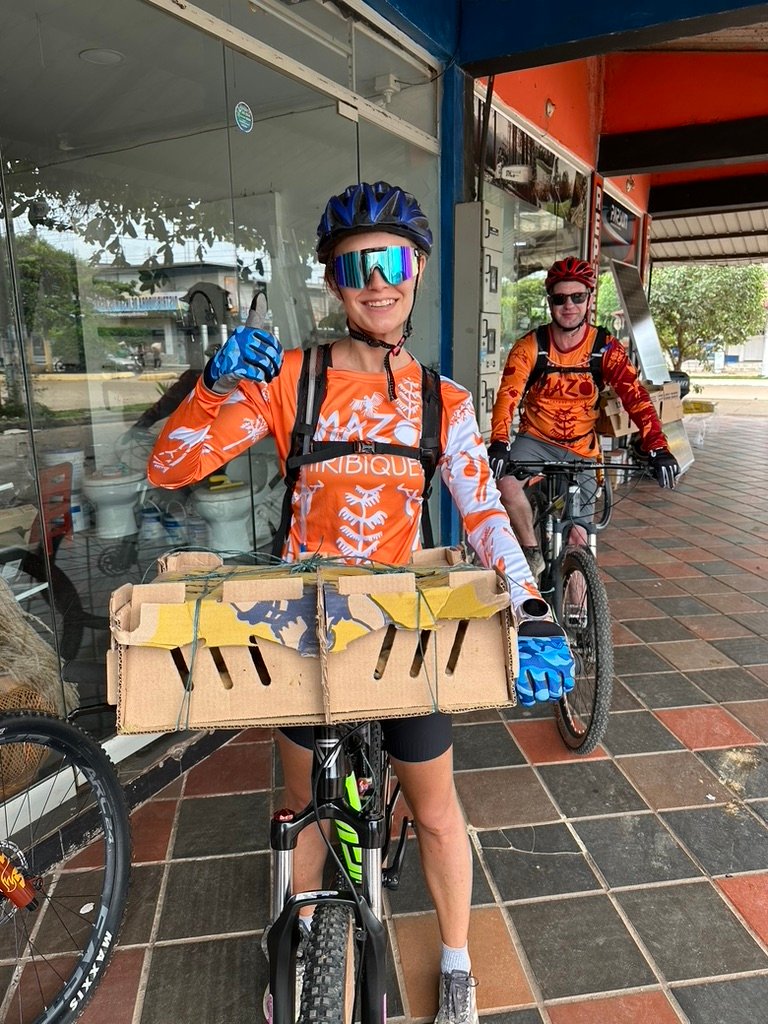
EXAMPLE — NOT A GUARANTEED ITINERARY
How an Expedition May Unfold
No two expeditions follow the same route. Every departure takes us to different territories across the Colombian Amazon — shaped by group size, local conditions, community priorities, costs, logistics, and where we have not yet been. What follows is an example of how an expedition unfolds. It is not a fixed plan. It never is.
Day 1 — Arrival and Orientation
Arrival at your departure point — confirmed after your application is accepted. Gear check, route briefing, and welcome dinner with your guides and the rest of the team. First look at what the territory ahead will ask of you.
Day 2 — First Trail Day
Into the jungle. River-edge singletrack through primary forest. Wildlife encounters may begin from the first hour. Community welcome at the end of the day.
Day 3 — Deep Forest and River Crossing
Deeper into the forest. One or more canoe crossings to connect trail sections. Community dinner — meals sourced from local families.
Day 4 — Rest Morning and Community Context
Rest morning to absorb the first three days. Afternoon trail. Where relationships, conditions, and timing allow, a conversation with an Indigenous knowledge holder or Dulce Amazónica ambassador.
Day 5 — River Transport Day
Long river leg by motorized canoe to the second zone of the expedition. The Amazon is a river civilization — this travel is part of the experience, not dead time. Evening debrief and preparation for the second half.
Days 6–7 — Remote Territory
The most remote trail days of the expedition. Terrain with no tourist infrastructure, no markers, and no cell signal. Your guides know this territory. Mission engagement: meet the ambassador or local partners your expedition supports.
Day 8 — Return Leg
Mixed river and trail return. By this point your body has adapted. The route feels different on the way back. Most riders describe this as a turning point.
Day 9 — Debrief and Departure
Return transport to your exit point. Final group debrief. Departure. Most riders allow an extra day at the destination before flying home.
The 5-day format covers Days 1–5 of this example sequence. Routes and structure vary per expedition.
What Is Included
Included
- All ground transport within the expedition zone
- An MBC mountain bike (riders may bring their own instead)
- Accommodation: community guesthouses, hammocks, or basic camping depending on location and conditions
- All meals prepared through local relationships during the expedition
- River transport where required, including bike logistics
- Lead guide and support team
- Emergency satellite communication device
- Wilderness first aid coverage
- Equipment support and field logistics
- All transportation required from Bogotá into and within the expedition region (air, ground, or river, depending on the itinerary)
- Mission contribution to Dulce Amazónica and the Amazon Cultural Embassy
You arrange your travel to Bogotá. From there, Mountain Bike Colombia coordinates the transportation required to reach the expedition region. Depending on the destination, conditions, and itinerary, this may involve air, ground, river transport, or a combination of these. The required Bogotá-onward expedition transportation is included in the USD $3,250 trip price. Your travel to Bogotá is not included.
Not Included
- International or domestic travel to Bogotá, your expedition meet-up point (travel to Bogotá is not included; from Bogotá onward, we coordinate the logistics)
- E-bikes, which are not permitted on Amazon expeditions
- Travel insurance — strongly recommended and may be required depending on route, season, and expedition format
- Personal mountain bike gear, clothing, hydration systems, protective equipment, and personal equipment
- Visas, entry requirements, vaccines, or travel documents where applicable
- Personal expenses before, during, or after the expedition not specifically included in the package
- Extra lodging, meals, transport, or itinerary changes caused by early arrivals, late departures, personal decisions, medical issues, weather delays, security changes, missed flights, or conditions outside the planned expedition scope
Risk, Safety and Conduct
Risk, Safety, and Conduct
This expedition enters territories where the nearest hospital may be several hours away by river or small aircraft. That is a fact, not a warning.
We do not offer comfort as a guarantee.
We do offer preparation, leadership, safety protocols, emergency communication, local guidance, and the discipline to turn back or change plans when conditions require it.
Safety does not mean forcing the original plan. Safety often means changing the plan. In the Amazon, good judgment matters more than itinerary loyalty.
Preparation is not the same as control.
We prepare carefully. We use experienced local guides. We carry emergency communication. We plan evacuation protocols before every departure. We follow conservative safety standards. What we cannot do is control the Amazon. What we can do is be ready.
Medical and Safety Provisions
- Emergency satellite communication device carried at all times
- Wilderness first aid-trained guide team
- Evacuation protocols established before every departure
- Route changes made without hesitation when safety, weather, or conditions require it
Conduct Standards
- Photography in communities requires explicit, individual consent. This is not negotiable. Each community has its own protocols and those protocols are explained in advance of arriving into each community we visit.
- Rider behavior that disrespects community protocols results in removal from the expedition without refund.
- The guide team’s judgment on safety, logistics, and community interaction is final.
We do not run this expedition to check boxes. We run it because the relationships that make it possible took years to build and must be protected.
How to Apply
Why the Expedition Begins with a Discovery Call
We do not take instant online bookings for this expedition.
Not because we want to make the process difficult, but because this expedition asks more from everyone involved.
Group size is small. Conditions are remote. Routes can change. The mission matters. Community relationships must be protected. One person’s expectations, attitude, or behavior can affect the whole team.
The Discovery Call helps both sides understand whether this is the right fit.
We talk through your riding background, fitness, expectations, flexibility, questions, comfort with uncertainty, and reasons for wanting to join.
We also explain the realities clearly: the risks, the discomforts, the logistics, the mission, and the conditions that cannot be guaranteed.
If the expedition is right for you, we move forward together.
If a different experience would serve you better, we will tell you honestly.
That is not rejection. That is respect for you, the team, the Amazon, and the mission.
On Consent and Storytelling
Why We Do Not Share Community Stories Casually
We do not collect Indigenous voices as marketing material.
Stories from riders, guides, ambassadors, and communities are shared only when consent is clear, the context is respectful, and the people involved have been given full control over how their words and images are used.
Until a story is ready to be shared properly, we would rather leave space than turn someone’s life into content.
The Ecosystem Behind the Expedition
The Larger Mission Behind the Expedition
Mountain Bike Colombia is one part of a larger ecosystem built to support Indigenous Colombian Amazon communities through fair-trade systems, cultural exchange, and long-term field relationships.
- Dulce Amazónica — Rotating Indigenous ambassadors, artesанías, and Amazon ice cream sourced from communities across the Colombian Amazon
- Origen Amazónica — Fair-trade Amazon products with direct community compensation
- ColombianAmazon.com — Documentation, journalism, and policy tracking for the Colombian Amazon
- Casa de Ciclistas — Base of operations in Guatapé, Colombia (casadeciclistas.com)
You do not need to understand the full ecosystem before applying. But the expedition does not exist in isolation. It exists because of relationships built across all of these systems.
Still Reading?
Then You May Be the Right Person.
Most people are not looking for this.
Most people want comfort, certainty, easy photos, and a story they can control.
This expedition asks for something different.
It asks for patience.
It asks for humility.
It asks for strength.
It asks for flexibility.
It asks for respect.
It asks you to enter the Amazon without trying to own the experience.
If that makes you uncomfortable, this may not be the right expedition.
If it makes you curious, serious, and ready to prepare properly, the next step is a Discovery Call.
The Discovery Call is not a sales call. It is a conversation to confirm fit, answer your questions honestly, and determine whether this expedition is right for you, the group, and the mission.
If it is, we move forward together.
If it is not, we will tell you directly.